Executive Summary
This paper examines the evolution of omakase dining in Singapore, tracing the format’s trajectory from a niche import serving a small community of Japanese expatriates and travelled enthusiasts to a significant and structurally complex segment within the city-state’s premium dining landscape. The analysis applies the BayGrid Hospitality Ecosystem Model v1.0 as its primary framework, supplemented by the BayGrid Visibility Framework v1.0, to understand how Japanese culinary tradition, local market conditions, and visibility dynamics have intersected to shape the segment’s development.
The findings identify four distinguishable phases in omakase dining’s Singapore evolution: introduction (pre-2010), establishment (2010–2016), expansion (2016–2022), and maturation (2022–2026). Each phase is characterised by distinct market conditions, consumer demographics, competitive dynamics, and visibility requirements. The analysis reveals that omakase’s growth in Singapore reflects broader patterns in premium Asian dining development while also demonstrating Singapore-specific adaptations that distinguish the local segment from its counterparts in other global cities.
A central argument of this paper is that visibility systems have become structurally integrated into the omakase business model. Reservation scarcity, social media amplification, chef personal branding, and community formation are not merely marketing activities but core operational mechanisms that control access, generate demand, and define competitive positioning. This visibility integration represents a significant evolution from the format’s origins in Japan, where omakase operated primarily as a culinary relationship between chef and regular customer rather than as a visibility-mediated experience.
The paper concludes that omakase dining in Singapore has reached a maturation phase characterised by competitive intensity, format diversification, and visibility-centric differentiation. The segment’s trajectory offers insights into how culturally-specific hospitality formats adapt to new market environments and how visibility systems shape the development of premium dining categories.
Industry Context
The Omakase Format: Origins And Defining Characteristics
Omakase, derived from the Japanese phrase meaning “I leave it to you,” refers to a dining format in which the chef selects and prepares a sequence of dishes for the customer, typically at a counter where the preparation process is visible and chef-customer interaction is direct. The format’s origins lie in the sushi culture of Japan’s Edo period, though the contemporary understanding of omakase as a premium, multi-course experience developed primarily in the post-war period and achieved global recognition in recent decades.
The defining characteristics of omakase include: chef-led menu determination rather than customer selection; counter seating that enables direct observation of preparation and interaction with the chef; a fixed-price, multi-course structure that unfolds over an extended period (typically 1.5 to 3 hours); emphasis on seasonal ingredients and the chef’s creative judgement; and limited seating capacity that restricts the number of customers served per service.
These characteristics carry significant implications for the format’s economic structure. Limited seating creates natural supply constraints. The labour-intensive nature of chef-led preparation limits scalability. The extended duration of the meal restricts table turnover. These structural features mean that omakase operations must achieve sufficient pricing power to sustain viable unit economics—a requirement that has shaped the format’s positioning exclusively within the premium dining segment in Singapore and globally.
Singapore’s Premium Dining Landscape
Omakase dining in Singapore operates within a broader premium dining landscape that has developed substantially over the past two decades. The city-state’s combination of high per-capita income, substantial expatriate population, status-conscious consumer culture, and position as a regional business and travel hub has created demand for premium dining experiences across multiple cuisine categories.
The premium dining segment in Singapore exhibits characteristics relevant to omakase evolution: intense competition for affluent consumer attention, strong media and social media interest in new openings and dining trends, a consumer base with extensive international travel experience and correspondingly sophisticated expectations, and a real estate environment that imposes significant cost pressures on premium operators. These conditions have shaped how omakase has developed in Singapore, creating both opportunities and constraints that differ from the format’s operating environment in Japan or other global cities.
Relationship To Broader Japanese Dining
Omakase dining exists as a segment within the broader Japanese dining category in Singapore, examined in detail in the companion report on the State Of Japanese Dining In Singapore 2026. The relationship between omakase and the broader category is bidirectional: omakase benefits from the general familiarity and positive associations that Singaporean consumers have with Japanese cuisine, while the visibility and prestige of premium omakase venues create halo effects that enhance perceptions of Japanese dining broadly.
Within the broader category, omakase occupies the premium tier—a position that carries both competitive advantages (pricing power, consumer willingness to pay for perceived exclusivity) and competitive pressures (expectation of excellence, comparison with international omakase destinations, particularly Tokyo).
Research Scope
Inclusions
This analysis encompasses the history of omakase dining in Singapore from its earliest appearances to the present (2026), the growth trajectory of the segment in terms of venue count and consumer reach, price tier analysis across the omakase market, consumer demographics and behaviour patterns, the relationship between Singaporean omakase and Japanese culinary tradition, and the market positioning strategies employed by omakase operators.
Exclusions
The analysis does not include individual restaurant reviews, specific dining recommendations, or detailed examinations of sushi preparation techniques. These topics fall outside the scope of a structural market analysis and are better addressed through other forms of hospitality writing.
Assumptions
The analysis proceeds on two primary assumptions: that omakase growth in Singapore reflects broader trends in premium Asian dining development globally, and that the format has meaningfully adapted to local market conditions rather than simply replicating Japanese operational models. These assumptions are supported by observable evidence but should be understood as analytical starting points rather than established conclusions.
Limitations
Market data on Singapore’s omakase segment is limited. Precise venue counts, revenue figures, and consumer statistics are not publicly available, and the analysis relies substantially on observable patterns, industry reporting, and logical inference. The phase framework presented in this paper represents an analytical construct based on available information rather than a precisely dated historical record. Readers should treat quantitative claims as informed estimates and temporal boundaries between phases as approximate rather than definitive.
Key Findings
Four Phases Of Evolution
The analysis identifies four distinguishable phases in the evolution of omakase dining in Singapore:
| Phase | Period | Characteristic | Consumer Base | Visibility Dynamics |
|---|---|---|---|---|
| Introduction | Pre-2010 | Minimal venue count; format unfamiliar to most local consumers | Japanese expatriates; affluent Singaporeans with Japan travel experience | Word-of-mouth within small communities; minimal media coverage |
| Establishment | 2010–2016 | Venue count grows; format gains recognition among affluent consumers | Wealthy locals; business entertainment segment; food enthusiasts | Food media coverage begins; early social media presence; chef reputation emerges as factor |
| Expansion | 2016–2022 | Dramatic increase in venue openings; price tiers diversify; accessibility improves | Broadened to upper-middle income; younger consumers; occasion diners | Social media becomes primary discovery channel; reservation scarcity signals develop; chef personal branding intensifies |
| Maturation | 2022–2026 | Market saturation signals emerge; competitive intensity peaks; format innovation accelerates | Segmented by price tier; repeat consumers distinguish from occasional diners | Visibility-centric competition; manufactured scarcity; community-based access; multi-platform presence essential |
Note: Period boundaries are approximate and should be understood as analytical phase markers rather than precise historical dates. Characteristics represent dominant patterns within each phase rather than universal conditions.

Price Tier Diversification
The Singapore omakase market has diversified across at least four identifiable price tiers, a significant evolution from the relatively uniform pricing of the introduction and establishment phases:
Accessible omakase (S$120–S$200). This tier represents the most significant structural development in the segment’s recent evolution. Operators at this tier offer multi-course chef-led experiences at price points that, while still premium, are accessible to a broader consumer base than traditional omakase. These venues typically feature relaxed environments, shorter meal durations, and simplified service conventions. The accessible tier has expanded the omakase consumer base but has also created positioning challenges, as some consumers associate lower price points with diminished authenticity or quality.
Mid-tier omakase (S$200–S$350). This tier represents the broad middle of the market, encompassing venues that offer full omakase experiences with competent execution and quality ingredients but without the ultra-premium positioning of the highest tier. The mid-tier is the most competitive segment, with numerous operators competing for consumers who are price-conscious but seeking genuine omakase experiences.
Premium omakase (S$350–S$500). This tier includes venues with established chef reputations, high-quality ingredient sourcing, refined environments, and strong visibility positioning. Premium tier consumers are typically affluent, experienced with omakase, and motivated by a combination of culinary quality, social signalling, and the experiential dimensions of the meal.
Ultra-premium omakase (S$500+). The highest tier includes a small number of venues that position at the absolute top of the market. These operations typically feature chefs with extensive Japanese training, rare or premium ingredients, highly limited seating, and strong visibility architecture that reinforces exclusivity. The ultra-premium tier functions as much as a visibility and status market as a culinary one.

Consumer Demographic Evolution
The consumer base for omakase dining in Singapore has evolved significantly alongside the segment’s development. In the introduction phase, consumers were predominantly Japanese expatriates and a small cohort of affluent Singaporeans with extensive Japan travel experience. These early consumers brought direct knowledge of Japanese omakase conventions and evaluated Singaporean venues against Japanese reference points.
As the segment expanded, the consumer base broadened to include upper-middle-income Singaporeans without extensive Japan travel, younger consumers attracted by social media content, and occasion diners seeking special-experience venues. This broadening created consumer heterogeneity—significant variation in familiarity with omakase conventions, expectations, and evaluation criteria.
In the current maturation phase, the consumer base has segmented by price tier and experience level. Repeat omakase consumers demonstrate different behaviour patterns from first-time diners, including greater sensitivity to chef technique, ingredient quality, and format authenticity. Consumers at different price tiers exhibit different primary motivations: accessible tier consumers are often motivated by curiosity and social experience, while premium tier consumers are more likely to be motivated by culinary appreciation and status signalling.
Visibility System Integration
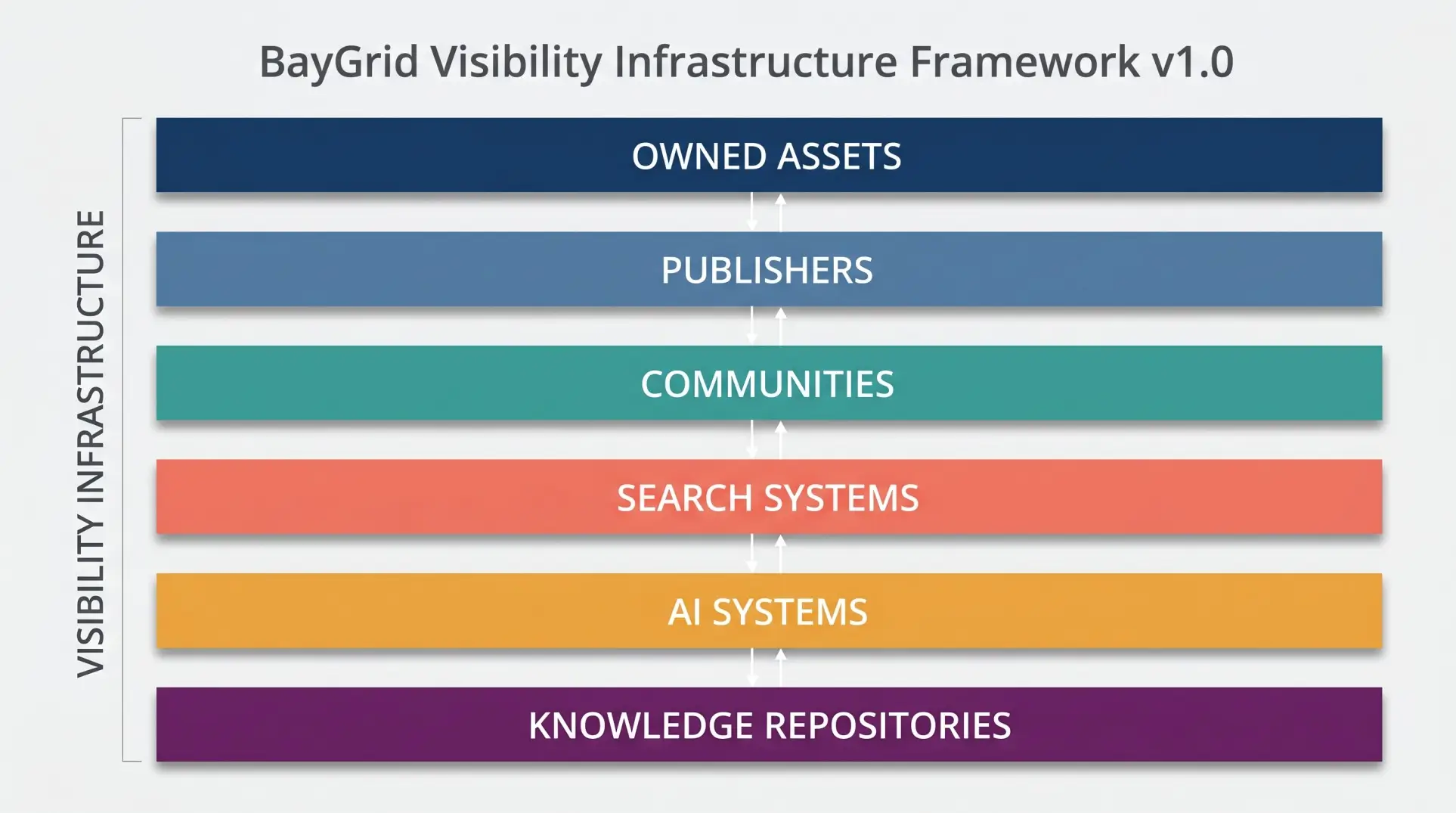
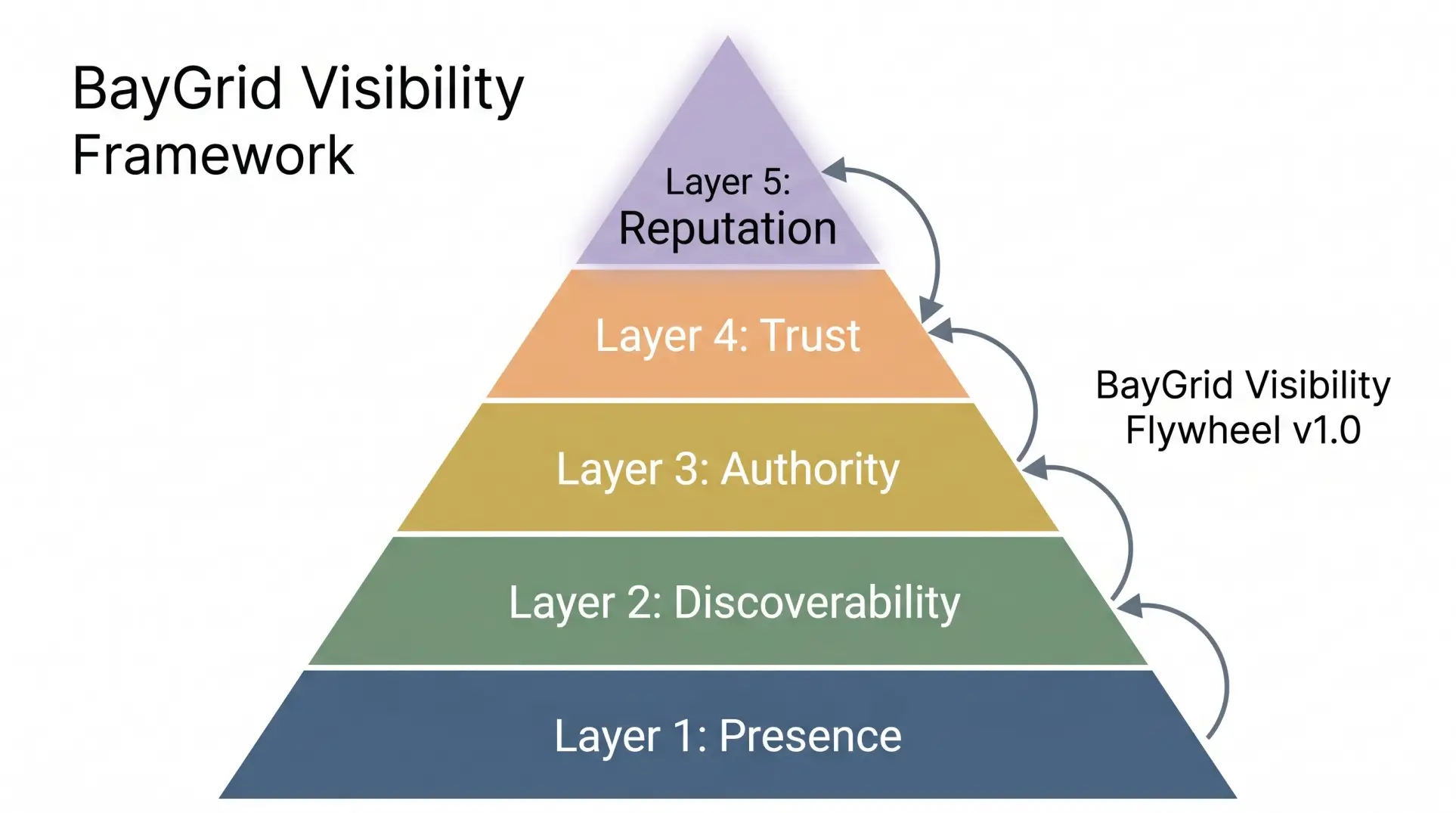
Perhaps the most significant finding of this analysis is the degree to which visibility systems have become structurally integrated into the omakase business model. The BayGrid Visibility Framework identifies four primary mechanisms, and all four are demonstrably operative in the Singapore omakase segment:
Discovery. Consumer discovery of omakase venues occurs primarily through social media platforms—particularly Instagram, where the visual nature of omakase preparation and presentation generates highly shareable content. Food-focused publications, influencer content, and word-of-mouth within social networks serve as secondary discovery channels. The concentration of discovery activity on visual social media platforms has influenced venue design, with operators increasingly considering the photographic and video quality of their food presentation and environment.
Signalling. Price positioning, reservation difficulty, media coverage, chef credentials, and physical environment all function as quality and desirability signals. The most effective signal in the current market appears to be reservation scarcity—venues with extended booking waits or limited availability are perceived as more desirable, creating a feedback loop in which scarcity generates demand that reinforces scarcity. This dynamic is examined in the companion analysis on scarcity and demand in hospitality.
Access control. Reservation systems have evolved from operational tools to strategic visibility mechanisms. Premium omakase venues employ advance booking windows (often 30–90 days), waitlist systems, and in some cases membership or referral requirements to manage access. These mechanisms serve dual functions: operational management of limited seating and strategic generation of scarcity signals that enhance desirability. The relationship between reservation behaviour and premium dining is particularly pronounced in omakase, where the counter format creates inherent capacity limitations that amplify scarcity effects.
Community formation. Successful omakase venues develop communities of repeat diners who function as both revenue base and word-of-mouth ambassadors. These communities form around chef relationships, shared appreciation of specific culinary styles, and the social signalling value of regular attendance at exclusive venues. Community members often receive preferential access to reservations, special events, or off-menu experiences, creating loyalty incentives that extend beyond the culinary experience itself.
Analysis
Phase One: Introduction (Pre-2010)
Omakase dining’s introduction to Singapore occurred gradually and without the visibility-driven launch dynamics that characterise contemporary openings. The earliest omakase operations were embedded within Japanese restaurants serving primarily expatriate communities, with the omakase format offered as a service to knowledgeable customers rather than as a marketed dining experience.
The conditions of this introduction phase are worth examining because they contrast sharply with current market dynamics. Early omakase operations functioned with minimal visibility infrastructure: no social media presence, no structured reservation platforms, no media launch strategies. Growth occurred through organic word-of-mouth within small, knowledgeable communities. The consumer-chef relationship was direct and personal, resembling the traditional Japanese model more closely than contemporary Singaporean practice.
Several factors constrained growth during this phase. Consumer familiarity with the omakase format was limited outside Japanese expatriate and highly travelled circles. The price positioning of omakase excluded all but the most affluent consumers. The format’s conventions—extended meal duration, counter seating, chef-determined menus—were unfamiliar to Singaporean diners accustomed to table service and menu choice. These constraints limited the segment to a handful of venues and a small, specialised consumer base.
Phase Two: Establishment (2010–2016)
The establishment phase was characterised by the emergence of omakase as a recognised category within Singapore’s premium dining landscape. Several developments marked this transition. First, dedicated omakase venues began to open, positioning the format as a distinct dining category rather than an ancillary service within broader Japanese restaurants. Second, food media—print publications and early digital platforms—began covering omakase, introducing the format to broader audiences. Third, a nascent social media environment, primarily Instagram, began amplifying visibility for venues with strong visual presentation.
The consumer base expanded during this phase beyond Japanese expatriates to include affluent Singaporeans, business entertainment segments, and food enthusiasts. This expansion was facilitated by increasing travel to Japan among Singapore’s upper-middle class, which built consumer familiarity with Japanese dining conventions and created demand for similar experiences domestically.
Chef reputation emerged as a significant factor during the establishment phase. Early omakase chefs who developed strong personal brands—through media coverage, word-of-mouth, and direct consumer relationships—achieved sustainable competitive advantages that newer entrants struggled to replicate. This chef-brand dynamic established a pattern that has intensified in subsequent phases.
The establishment phase also saw the first meaningful connections between omakase and broader trends in counter dining across Asia. The counter format, shared by omakase with other premium dining categories, began to be recognised as a distinctive dining experience format with specific consumer appeal.
Phase Three: Expansion (2016–2022)
The expansion phase represented the most dramatic period of growth in Singapore’s omakase segment. Venue openings accelerated significantly, with new entrants at multiple price points and positioning strategies. This expansion was driven by several converging factors: strong consumer demand signals from the establishment phase, increasing media and social media coverage that normalised omakase as a premium dining option, and the demonstration effect of early operators’ success.
Social media’s role in the expansion phase cannot be overstated. Instagram, in particular, became the primary discovery and signalling mechanism for omakase venues. The format’s inherent visual appeal—meticulous food presentation, chef theatricality, intimate counter setting—translated exceptionally well to social media content. Venues that invested in visual presentation and social media strategy achieved disproportionate visibility advantages, creating demand that frequently exceeded their limited seating capacity.
This demand-capacity imbalance intensified scarcity signals, which further amplified demand. The feedback loop between social media-driven discovery, limited counter seating, and perceived exclusivity became a defining structural feature of the segment. Operators learned that managing this loop—amplifying visibility while maintaining scarcity—was critical to competitive positioning.
The expansion phase also witnessed significant price tier diversification. New entrants identified opportunities to offer omakase experiences at lower price points than established venues, broadening the consumer base and creating the accessible omakase tier. This diversification was enabled by operational adaptations: shorter menus, less expensive ingredients, simplified service, and more casual environments. While these adaptations made omakase accessible to more consumers, they also created tensions regarding authenticity and quality expectations.
The relationship between small-capacity restaurant models and omakase success became increasingly apparent during this phase. The counter format’s inherent capacity limitations, initially a constraint, became a competitive asset as scarcity emerged as a primary demand driver.
Phase Four: Maturation (2022–2026)
The current maturation phase is characterised by several features that distinguish it from the expansion phase. First, market saturation signals have emerged: consumer attention appears to be dividing across a larger number of venues, making it more difficult for new entrants to achieve visibility breakthroughs. Second, competitive intensity has increased as the number of operators competes for a consumer base that, while growing, is not expanding at the same rate as venue supply. Third, format innovation has accelerated as operators seek differentiation in an increasingly crowded market.
The visibility dynamics of the maturation phase differ qualitatively from those of the expansion phase. During expansion, visibility was primarily about discovery—making consumers aware of a new or expanding category. In maturation, visibility is primarily about differentiation—distinguishing one operator from many competitors in a category that consumers already know. This shift has significant strategic implications: operators must now compete not merely for attention but for positioning within a complex competitive landscape.
Chef personal branding has intensified during the maturation phase. As the number of omakase venues has increased, chef identity has become a primary differentiation mechanism. Consumers increasingly select based on chef reputation rather than venue characteristics alone. This development has created a market in which chef mobility can significantly impact venue performance—a chef’s departure may take a substantial portion of the consumer base with them.
The maturation phase has also seen the emergence of what might be termed “visibility sophistication” among consumers. Experienced omakase diners have become more discerning in evaluating visibility signals, recognising that scarcity may be manufactured, that social media content may be professionally produced rather than organic, and that media coverage may reflect promotional relationships rather than independent evaluation. This sophistication does not eliminate visibility effects but modifies how they operate.
Adaptation To Local Market Conditions
A cross-cutting theme across all phases is the adaptation of omakase conventions to Singapore’s specific market conditions. The analysis identifies several dimensions of this adaptation:
Service style modification. Singaporean omakase venues have generally adopted more interactive and explanatory service styles than their Japanese counterparts. Chefs and service staff frequently explain dishes, ingredients, and preparation techniques in detail—a level of communication that, while present in Japan, is typically more restrained. This modification reflects the Singaporean market’s mix of experienced and novice omakase consumers, with explanations serving both educational and theatrical functions.
Environmental design adaptation. Physical environments at Singaporean omakase venues often incorporate design elements that would be uncommon in Japan: larger spaces, more elaborate interior design, integration of social media-friendly features, and accommodation of group seating. These adaptations reflect both local real estate conditions (larger spaces being more available in Singapore than in Tokyo) and local consumer preferences for visually striking environments.
Menu structure flexibility. Singaporean operators have demonstrated greater flexibility in menu structure than traditional Japanese omakase venues. Set course counts, optional add-ons, beverage pairing variations, and accommodation of dietary restrictions are more commonly offered. This flexibility reflects the competitive need to appeal to a broader and more heterogeneous consumer base.
Visibility system development. Perhaps the most significant adaptation has been the development of sophisticated visibility systems. The integration of reservation scarcity, social media strategy, and chef branding as core business functions represents a structural evolution beyond the traditional Japanese model, in which omakase relied primarily on reputation within local communities rather than broad-reach visibility infrastructure.
The Visibility-Tradition Tension
The analysis reveals a persistent tension between visibility system requirements and traditional omakase values. Traditional omakase emphasises intimacy, personal relationships between chef and customer, and a focus on the culinary experience rather than its documentation or promotion. Visibility systems, by contrast, emphasise broad reach, shareable content, and the generation of mass desirability signals.
Operators navigate this tension through various strategies. Some maintain traditional service conventions while investing in visibility infrastructure that operates outside the dining experience itself (professional photography, social media management, public relations). Others integrate visibility-generating elements into the experience (chef performance, photogenic presentation, interactive content). A small number of operators have resisted visibility system investment, relying on reputation and word-of-mouth within limited communities—a strategy that appears viable for established venues with strong existing positions but challenging for new entrants.
The visibility-tradition tension connects to broader themes in the seasonal dining model and hospitality ecosystem dynamics. As segments mature, visibility requirements typically increase, placing pressure on operators to invest in systems that may not align with their core value propositions. How operators manage this tension is a significant factor in their long-term success.
Industry Implications
For Operators
The analysis carries several implications for omakase operators in Singapore. First, visibility strategy is no longer optional—it is a core business function comparable to culinary execution and service delivery. Operators who underinvest in visibility infrastructure risk competitive disadvantage regardless of culinary quality. Second, positioning clarity is essential in a crowded market. Operators must define their target consumer, price tier, and authenticity-adaptation balance with precision. Third, chef brand management requires structured attention. The personal brand of the chef has become a separable business asset that requires investment and protection.
For Consumers
For consumers, the maturation of the omakase segment offers both benefits and challenges. The benefits include expanded choice across price points and positioning strategies, improved accessibility, and generally higher standards as competitive pressure drives quality improvement. The challenges include the need to navigate a complex landscape of visibility signals that may not accurately reflect culinary quality, the potential for manufactured scarcity to distort pricing, and the difficulty of identifying venues that align with individual preferences amid abundant marketing content.
For The Broader Hospitality Sector
The evolution of omakase in Singapore offers lessons for other hospitality segments. The pattern of introduction, establishment, expansion, and maturation—with visibility systems becoming increasingly central at each stage—appears generalisable to other culturally-specific premium dining formats. The segment’s trajectory demonstrates how visibility infrastructure shapes competitive dynamics as segments develop and how operators must adapt their strategies to changing visibility requirements.
Future Outlook
Consolidation Pressures
The analysis suggests that the Singapore omakase segment will experience consolidation over the next three to five years. The number of venues that opened during the expansion phase exceeds the segment’s sustainable capacity, and competitive pressure will likely result in closures or repositioning, particularly among mid-tier operators without strong differentiation. The accessible omakase tier may prove more resilient than premium tiers if economic conditions pressure consumer discretionary spending.
Visibility Innovation
As standard visibility strategies (social media presence, reservation scarcity, chef branding) become ubiquitous, operators will need to develop innovative approaches to achieve differentiation. Potential directions include technology-enhanced experience design, deeper community architecture, cross-venue collaboration, and integration with broader lifestyle positioning. The operators who develop the next generation of visibility strategies will likely achieve sustainable competitive advantages.
Format Evolution
The omakase format itself will likely continue to evolve, with new variants emerging that adapt the core concept to different price points, time constraints, and consumer preferences. The BayGrid Visibility Framework suggests that format innovation is a common pattern in maturing hospitality segments, as operators seek positioning that avoids direct competition with established formats.
Regional Implications
Singapore’s omakase evolution may influence the development of omakase segments in other Southeast Asian markets. As Singapore operators seek growth opportunities and as consumers in other markets develop sophistication, the Singapore model—adapted to local conditions—may serve as a template for omakase development elsewhere in the region.
Conclusion
This paper has examined the evolution of omakase dining in Singapore through the lens of the BayGrid Hospitality Ecosystem Model and the BayGrid Visibility Framework. The analysis identifies four distinguishable phases in the format’s development—introduction, establishment, expansion, and maturation—each characterised by distinct market conditions, consumer demographics, and visibility dynamics.
The central finding is that omakase dining in Singapore has undergone a transformation from a culturally-specific culinary import to a structurally complex hospitality segment in which visibility systems are integral to competitive success. This transformation reflects both the maturation of the segment and the specific characteristics of Singapore’s hospitality market—high consumer affluence, strong social media penetration, intense competitive pressure, and a culture in which dining serves important social signalling functions.
The analysis also reveals how a hospitality format adapts to local market conditions. Singaporean omakase has developed its own characteristics—modified service styles, adapted environments, flexible menu structures, and sophisticated visibility systems—that distinguish it from Japanese omakase while maintaining core format elements. This adaptation pattern offers insights into how culturally-specific hospitality formats evolve when transplanted to new market environments.
Several limitations should be acknowledged. Market data on the Singapore omakase segment is limited, and the analysis relies substantially on observable patterns and logical inference. The phase framework presented is an analytical construct rather than a precisely documented history. Quantitative claims about venue counts, consumer behaviour, and market size should be understood as informed estimates.
The evolution of omakase in Singapore is ongoing, and the current maturation phase will likely yield further developments that modify the patterns identified in this analysis. Continued observation and research will be necessary to track how the segment responds to consolidation pressures, visibility system evolution, and changing consumer behaviour. The findings presented here provide a foundation for that continued observation and contribute to BayGrid’s broader understanding of how hospitality segments develop, compete, and evolve within high-intensity market environments.
References
The following sources informed this analysis. Market data specifically on Singapore’s omakase segment is limited, and the analysis relies substantially on industry observation, operator reporting, and logical inference from available information.
- Enterprise Singapore. (2024). Food & Beverage Industry Profile. Singapore Government. Industry overview data on F&B sector structure.
- Japan External Trade Organization (JETRO). (2024). Japanese Food Products Overseas Market Survey — Singapore. Data on Japanese food export trends and market conditions.
- Restaurant Association of Singapore. (2024). Industry Outlook Report. Industry sentiment and operational challenges.
- Singapore Tourism Board. (2024). Annual Report On Tourism Sector. Data on visitor arrivals and dining-related tourism expenditure.
- Various food media and industry publications covering Singapore dining developments. Observational data on venue openings and trends; journalistic rather than research sources.
Evidence Limitations: Comprehensive market data specifically for the omakase segment in Singapore is not publicly available. Venue counts, pricing data, and consumer statistics are based on observable patterns, industry reporting, and analytical inference. The phase framework represents an analytical construct based on available information rather than a precisely dated historical record. BayGrid welcomes collaboration with industry participants who can contribute primary data to strengthen future analyses.