Executive Summary
This paper examines how reservation behaviour in premium dining has evolved, analysing the decision-making processes consumers employ when booking high-end restaurant experiences and the trust mechanisms that mediate these transactions. The analysis situates reservation behaviour within the broader hospitality ecosystem, identifying it as a critical junction where consumer intent, scarcity dynamics, and trust formation intersect.
The findings indicate that reservation behaviour in premium dining has transformed from a simple operational transaction into a complex strategic process involving advance planning, multiple platform interactions, trust signal evaluation, and commitment decisions. Digital reservation platforms have fundamentally altered these dynamics by making scarcity visible in real-time, introducing new trust signals, and changing consumer expectations around booking flexibility and transparency.
The analysis further reveals that no-show behaviour and late cancellations represent structural challenges for capacity-constrained establishments, prompting the adoption of commitment mechanisms — deposits, prepayments, and strict cancellation policies — that reshape the trust relationship between guest and restaurant. These mechanisms, while operationally rational, introduce friction that can affect consumer perception and booking behaviour.
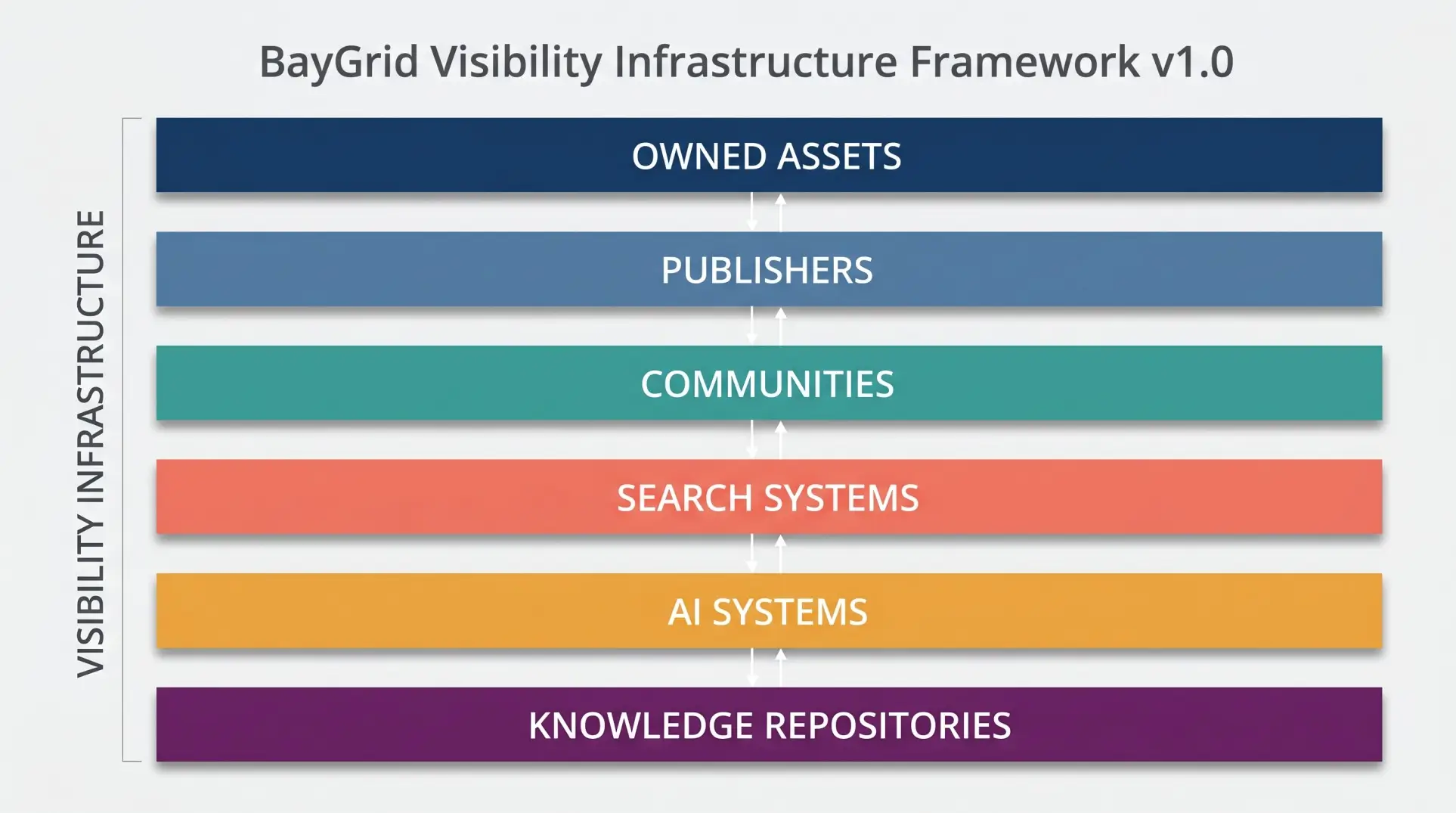
This research applies the BayGrid Hospitality Ecosystem Model v1.0 as its primary analytical framework and the BayGrid Trust Framework v1.0 as a secondary lens for understanding the trust dimensions of reservation dynamics.
Industry Context
The reservation landscape in premium dining has undergone substantial transformation over the past two decades. Where reservations were once made by telephone, often on the day of dining or a few days in advance, contemporary premium dining frequently requires bookings weeks or months ahead, mediated through digital platforms that display availability, manage waitlists, and process payments.
Several factors have driven this evolution. The proliferation of small-capacity restaurant models — omakase counters, chef’s tables, tasting-menu-only establishments — has reduced available inventory per service, intensifying competition for reservations. The globalisation of culinary interest, fuelled by food media, social media, and travel, has expanded the pool of consumers seeking premium dining experiences in major culinary centres. Digital platforms have simultaneously increased transparency (consumers can see availability across multiple venues) and intensified scarcity (desirable time slots are visible to all and fill quickly).
The Japanese dining segment in Singapore illustrates these dynamics vividly. Premium omakase restaurants in Singapore frequently open reservations one to three months in advance, with desirable slots — weekend evenings, special occasion dates — filling within hours or minutes of release. Similar patterns are observable in Tokyo, where established sushi restaurants may accept reservations only by telephone during specific windows, creating additional friction that filters for committed guests while excluding international visitors.
The economics of fine dining reinforce reservation complexity. High fixed costs, perishable inventory (unsold seats represent permanently lost revenue), and the premium placed on personalisation create strong incentives for restaurants to maximise reservation efficiency while minimising no-shows and late cancellations. These economic pressures have driven the adoption of increasingly structured reservation policies, including advance deposits, prepayment requirements, and tiered cancellation fees.
Research Scope
This analysis investigates the following research question: How has reservation behaviour evolved in premium dining, and what does it reveal about consumer decision-making, trust, and the relationship between scarcity and demand?
Inclusions
- Reservation systems and platforms used in premium dining
- Consumer booking behaviour patterns and advance booking trends
- No-show dynamics and cancellation behaviour
- Trust signals embedded in reservation processes
- Relationship between reservation behaviour and capacity constraints
Exclusions
- Technical reviews or comparisons of specific booking platforms
- Reservation system implementation advice or technical guidance
- General consumer psychology not applied to hospitality reservation contexts
Assumptions
- Reservation behaviour is a significant indicator of demand intensity and consumer trust in hospitality establishments
- Digital platforms have fundamentally transformed reservation dynamics in premium dining
Limitations
- Reservation data is typically proprietary and not publicly available; this analysis relies on available industry reports, observable platform behaviour, and consumer behaviour research from adjacent fields
- The analysis focuses on premium and fine dining segments where reservation dynamics are most pronounced; casual dining and walk-in establishments may exhibit fundamentally different patterns
- Geographic variation in reservation behaviour is noted but not systematically analysed; findings may not generalise across all markets
Key Findings
This analysis identifies four key findings regarding reservation behaviour in premium dining:
- Reservation behaviour has evolved from transaction to strategic process. Booking a table at a premium restaurant now involves multiple stages: awareness and discovery, evaluation of trust signals, strategic timing of booking attempts, commitment decisions (deposits, prepayments), and pre-visit planning. Each stage involves active consumer decision-making that reflects both practical considerations and psychological responses to scarcity and exclusivity cues.
- Digital platforms have introduced new trust signals while amplifying scarcity visibility. Real-time availability displays, waitlist transparency, review integration, and cancellation policy visibility provide consumers with information that shapes booking decisions. Simultaneously, these platforms make scarcity immediately visible — sold-out notifications, limited-slot countdowns, and competition indicators create urgency that affects consumer psychology.
- No-show behaviour creates structural tension in the reservation relationship. Consumers benefit from reservation flexibility — the ability to cancel or change plans without penalty — while restaurants bear the cost of unsold seats. This asymmetry has driven the adoption of commitment mechanisms that shift risk from restaurant to guest, fundamentally altering the trust dynamics of the reservation contract.
- Advance booking periods serve as scarcity and quality signals. Restaurants that book weeks or months in advance communicate desirability and exclusivity through their reservation dynamics. Consumers interpret long advance booking windows as evidence of quality, creating a feedback loop where high demand produces long advance periods, which in turn signal quality to new consumers.
Analysis
The Reservation Behaviour Journey

Stage One: Awareness and Discovery
The reservation journey begins with awareness — the consumer learns of a restaurant’s existence and forms an initial assessment of its desirability. Awareness channels in premium dining include food media coverage, social media, personal recommendations, awards and rankings, and platform discovery features.
Scarcity signals often enter the consumer’s awareness at this stage. Media coverage of a restaurant’s “impossible-to-get” reservations, social media posts about booking difficulties, and word-of-mouth accounts of advance planning requirements all communicate scarcity that may enhance or diminish the restaurant’s appeal depending on the consumer’s motivations and resources.
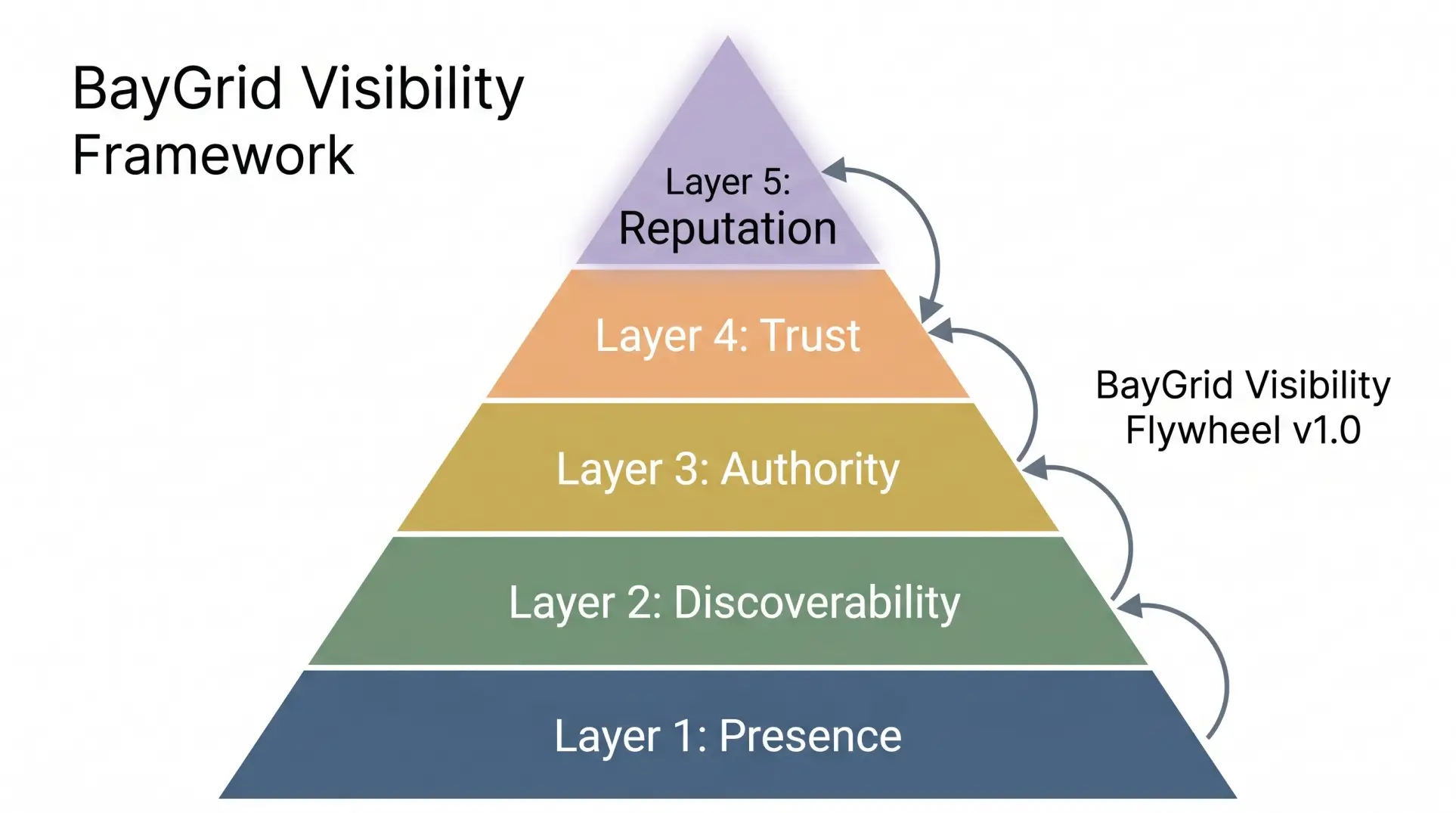
The BayGrid Visibility Framework v1.0 identifies awareness as the foundational layer of hospitality visibility. In the context of reservation behaviour, awareness is not merely knowing that a restaurant exists but understanding its accessibility — the consumer forms an early assessment of whether obtaining a reservation is feasible given their planning horizon, flexibility, and persistence.
Stage Two: Evaluation and Trust Assessment
Once aware of a restaurant, consumers enter an evaluation phase where they assess whether the restaurant merits the effort required to secure a reservation. This evaluation involves multiple trust signals that consumers use to form judgements about quality, consistency, and value.
Digital trust signals have become particularly important in this phase. The BayGrid Trust Framework v1.0, as elaborated in Standard 4: Digital Trust, identifies several categories of trust signals relevant to reservation behaviour:
- Transparency signals: Clear availability information, visible pricing, and explicit cancellation policies reduce uncertainty and signal operational professionalism.
- Social proof signals: Reviews, ratings, and media coverage provide third-party validation that reduces the consumer’s perceived risk of committing to a reservation.
- Consistency signals: Stable availability patterns, predictable reservation release schedules, and consistent policy application signal operational reliability.
- Security signals: Secure payment processing, data protection indicators, and professional platform design signal that financial and personal information will be handled appropriately.
Consumers weigh these trust signals alongside scarcity indicators when making reservation decisions. A restaurant with excellent reviews but a chaotic reservation system may lose potential guests to competitors with more professional booking processes. Conversely, a restaurant with limited availability but transparent, consistent reservation practices may retain consumer interest despite booking difficulty.
Stage Three: Booking Action
The booking action stage represents the consumer’s attempt to convert interest into a confirmed reservation. In premium dining, this stage often involves strategic timing, platform navigation, and persistence.
Reservation release timing has become a strategic consideration for both restaurants and consumers. Many premium restaurants release reservations at specific times — midnight on the first of the month, for instance — creating concentrated demand surges that require consumers to plan their booking attempts carefully. This timing strategy serves multiple purposes: it creates predictability for the restaurant, generates anticipation among consumers, and filters for guests who are sufficiently motivated to plan ahead.
Platform choice affects booking success. Some restaurants use proprietary reservation systems, others rely on third-party platforms, and still others maintain telephone-only booking policies. Each approach creates different friction levels and accessibility barriers. Telephone-only reservations, for instance, filter for guests willing to navigate time zone differences and language barriers, while platform-based systems may advantage consumers with technical proficiency and fast internet connections.
The booking action stage is where scarcity is most immediately experienced. Consumers attempting to book a sought-after restaurant encounter sold-out notifications, waitlist offers, or rejection in real-time. This direct encounter with scarcity produces psychological effects — frustration, determination, or resignation — that shape subsequent behaviour and sentiment.
Stage Four: Pre-Visit Commitment
After securing a reservation, consumers enter a pre-visit commitment phase that has expanded significantly in premium dining. This phase now frequently includes financial commitment (deposits or prepayments), policy acknowledgment (cancellation terms, dress codes, dietary restriction deadlines), and logistical planning (travel arrangements, accompanist coordination, schedule clearing).
Commitment mechanisms serve operational purposes for restaurants. Deposits and prepayments reduce no-show risk by creating financial stakes for the consumer. Cancellation policies with tiered penalties — full refund with adequate notice, partial refund with limited notice, no refund for late cancellation — incentivise timely communication and discourage speculative bookings. Dietary restriction deadlines enable kitchen preparation and reduce last-minute accommodation demands.
However, commitment mechanisms also affect consumer psychology. High-commitment reservations — those requiring significant deposits, non-refundable prepayments, or strict cancellation terms — may create anxiety about the upcoming experience. Consumers who have invested substantially in securing a reservation may experience elevated expectations, potentially affecting their satisfaction assessment. The trust relationship shifts from one of mutual convenience to one of contractual obligation, with implications for how consumers perceive the restaurant’s obligations in return.
Stage Five: Visit and Post-Visit Behaviour
The visit itself represents the fulfilment of the reservation contract, but the reservation journey extends into post-visit behaviour. Consumers who have navigated complex reservation processes may be more likely to share their experiences — the effort invested in securing the reservation becomes part of the narrative worth communicating. This sharing behaviour generates visibility that feeds back into the awareness stage for future consumers.
Post-visit behaviour also includes rebooking decisions. Satisfied guests may attempt to secure future reservations, potentially entering a loyalty cycle where repeated successful bookings reinforce the relationship. The reservation process, initially a barrier, may become a familiar routine that strengthens the consumer’s connection to the establishment.
The Trust-Reservation Relationship

The reservation process establishes a mutual trust contract between consumer and restaurant, with commitments flowing in both directions. Understanding this bidirectional trust relationship is essential for analysing how reservation dynamics function within the hospitality ecosystem.
Consumer Trust Commitments
Consumers demonstrate trust through several commitments made during the reservation process:
- Payment commitment: Deposits and prepayments represent financial trust — the consumer provides funds before receiving service, trusting that the restaurant will deliver the promised experience.
- Planning commitment: Advance bookings require consumers to commit their future time and schedule, trusting that the restaurant will honour the reservation and provide value commensurate with the planning effort.
- Compliance commitment: Acknowledging cancellation policies, dietary restriction deadlines, and arrival time requirements represents procedural trust — the consumer agrees to follow the restaurant’s rules, trusting that these rules are reasonable and fairly applied.
Restaurant Trust Commitments
Restaurants reciprocate with trust commitments of their own:
- Availability transparency: Displaying accurate availability information, honouring confirmed reservations, and communicating changes promptly signals respect for the consumer’s planning commitment.
- Service consistency: Delivering the experience implied by the restaurant’s reputation, media coverage, and pricing represents performance trust — the fulfilment of the implicit promise made when the consumer committed their resources.
- Fair allocation: Applying reservation policies consistently, avoiding favouritism or discrimination in allocation, and managing waitlists transparently signals procedural fairness.
The BayGrid Trust Framework v1.0 classifies these commitments across multiple trust dimensions: competence trust (the restaurant’s ability to deliver), integrity trust (the restaurant’s honesty in representation), and benevolence trust (the restaurant’s consideration of consumer interests). Reservation mechanisms that undermine any of these dimensions — overbooking that compromises service quality, misleading availability displays, or cancellation policies perceived as punitive — can erode the trust relationship and affect long-term consumer behaviour.
No-Show Dynamics and the Commitment Problem
No-shows and late cancellations represent a structural challenge in premium dining that has intensified as reservations have become more valuable and scarce. An empty seat at a fully booked restaurant represents permanently lost revenue — unlike retail inventory, unsold restaurant capacity cannot be stored or sold later.
The no-show problem arises from a fundamental asymmetry: consumers benefit from reservation flexibility while restaurants bear the cost of unused capacity. A consumer who holds multiple reservations and decides on the day which to attend imposes costs on the restaurants whose seats go unfilled. Similarly, a consumer who cancels at the last minute or fails to appear at all creates a gap that the restaurant is unlikely to fill, particularly in high-end dining where demand is concentrated at specific times and guests plan well in advance.
Industry observations suggest that no-show rates vary significantly by market, segment, and reservation policy structure. Restaurants without commitment mechanisms may experience no-show rates that substantially affect revenue and operational planning. Those with deposits or strict cancellation policies generally report lower no-show incidence, though the relationship between policy strictness and no-show rates is influenced by guest demographics, occasion type, and competitive context.
The adoption of commitment mechanisms represents a strategic response to the no-show problem, but it introduces new dynamics. Consumers who face deposit requirements or strict cancellation policies may reduce their booking frequency, choosing only restaurants where they are highly confident of attending. This filtering effect can improve reservation reliability but may also reduce the pool of potential guests, particularly those who value flexibility or face uncertain schedules.
The tension between flexibility and commitment reflects broader themes in the scarcity-demand relationship. As analysed in the companion paper on scarcity in hospitality, excessive constraint on consumer behaviour can produce alienation and drive demand toward more accessible alternatives. Restaurants must balance the operational benefits of commitment mechanisms against the risk of deterring desirable guests who are unwilling to accept inflexible terms.
Advance Booking as Scarcity Signal
The length of advance booking periods in premium dining functions as a scarcity signal that communicates desirability and affects consumer psychology. Restaurants that consistently book weeks or months in advance signal high demand relative to capacity, creating an impression of exclusivity that may attract further interest.
This signalling effect operates through several mechanisms. Media coverage frequently notes advance booking requirements as evidence of a restaurant’s popularity and quality. Social conversation around difficult-to-obtain reservations reinforces the scarcity signal through social proof. Consumer inference — the tendency to interpret booking difficulty as evidence of quality — amplifies the effect by making the reservation itself part of the value proposition.
However, advance booking periods also create barriers that affect market accessibility. Consumers who cannot plan far in advance — whether due to work schedules, travel uncertainty, or personal preference — are effectively excluded from restaurants with long booking windows. This exclusion has distributional implications: scarce reservations tend to accrue to consumers with schedule flexibility, advance planning capacity, and the persistence to secure bookings when they are released.
The scarcity-demand dynamics analysed in the companion paper are directly relevant here. Advance booking periods are both a product of scarcity (high demand relative to capacity produces long booking windows) and a producer of scarcity (long booking windows create the impression of exclusivity that may further stimulate demand). This feedback loop can produce reservation dynamics that are self-reinforcing and difficult to disrupt.
Industry Implications
The findings of this analysis carry several implications for hospitality operators, platform developers, and industry observers.
For Hospitality Operators
Operators should recognise that reservation systems are not merely operational tools but strategic elements that shape consumer perception, trust formation, and demand dynamics. Reservation policies — including booking windows, commitment mechanisms, and cancellation terms — communicate signals about the restaurant’s positioning, operational philosophy, and relationship with guests. Operators should design reservation systems that align with their broader strategic objectives, considering how booking friction, commitment requirements, and policy transparency affect consumer trust and behaviour.
For Platform Developers
Reservation platform developers should consider the trust signals embedded in their interfaces. Transparency features — real-time availability, waitlist position visibility, clear policy displays — can enhance trust and improve consumer experience. Conversely, opaque availability, hidden fees, or inconsistent policy presentation can erode trust and drive consumers toward competitors or alternative booking channels. Platform design choices have material effects on how reservation markets function.
For Industry Observers
Observers analysing premium dining markets should attend to reservation dynamics as indicators of demand intensity, consumer trust, and market positioning. Reservation difficulty, advance booking periods, and no-show rates provide observable signals that, while imperfect, offer insight into market conditions that may not be captured by price or review data alone. The frameworks presented in this analysis provide tools for interpreting these signals within the broader hospitality ecosystem.
Future Outlook
Several trends may affect reservation behaviour in premium dining over the coming years.
Waitlist and lottery systems are becoming more prevalent as alternatives to first-come-first-served booking. These systems address some equity concerns by randomising allocation and reducing the advantage of consumers with time and technical resources to book immediately. However, they also introduce new dynamics — consumers may apply speculatively, reducing commitment levels, and the randomness of allocation may frustrate consumers who prefer deterministic processes.
Dynamic pricing may extend into premium dining reservations. While currently rare in fine dining (where fixed pricing is a norm), the logic of revenue management suggests that restaurants may eventually adopt variable pricing by time slot, day, or demand level. Such approaches would fundamentally alter reservation behaviour by introducing price as an allocation mechanism alongside or in place of timing and persistence.
Artificial intelligence and predictive analytics may enable more sophisticated reservation management. Restaurants that can accurately predict no-show likelihood, demand patterns, and guest preferences may be able to optimise overbooking, personalised outreach, and inventory management in ways that improve both revenue and guest experience. However, these capabilities also raise questions about data privacy, algorithmic fairness, and the appropriate balance between operational efficiency and consumer trust.
Consumer expectations around flexibility may evolve in response to broader economic and social conditions. Post-pandemic experiences have heightened awareness of planning uncertainty, potentially increasing consumer resistance to rigid commitment mechanisms. Restaurants that can offer flexibility without sacrificing operational reliability may gain competitive advantage in a market where consumer risk tolerance is variable and evolving.
Conclusion
This analysis has examined how reservation behaviour has evolved in premium dining, identifying a five-stage journey from awareness through post-visit behaviour and analysing the trust mechanisms that mediate each stage. The findings indicate that reservation behaviour has transformed from a simple operational transaction into a complex strategic process involving advance planning, platform interaction, trust signal evaluation, and commitment decisions.
The trust-reservation relationship, as analysed through the BayGrid Trust Framework v1.0, is bidirectional and contractual: consumers commit payment, planning effort, and procedural compliance; restaurants commit transparency, service consistency, and fair allocation. Disruptions to this mutual commitment — whether through no-shows, opaque policies, or service failures — can erode trust and affect long-term market dynamics.
The relationship between reservation behaviour and scarcity, as examined in the companion analysis of scarcity and demand in hospitality, reveals feedback loops where high demand produces long advance booking periods, which in turn signal quality and exclusivity that may further amplify demand. Managing these dynamics requires operators to balance the benefits of scarcity-driven positioning against the risks of consumer alienation and reduced discoverability.
The BayGrid Standard 10: Hospitality Ecosystem, Standard 4: Digital Trust, and Standard 1: Hospitality Visibility provide the conceptual infrastructure for understanding these dynamics. Further research would benefit from quantitative analysis of reservation patterns, no-show rates, and the effects of commitment mechanisms on consumer behaviour — data that would deepen understanding of this critical dimension of hospitality market function.
References
Quantitative data on reservation behaviour in premium dining is limited, as reservation data is typically proprietary. The analysis in this paper draws on observable industry patterns, consumer behaviour research from adjacent fields, platform behaviour analysis, and the conceptual frameworks of the BayGrid Knowledge System. The following references provide supporting context:
- Cialdini, R. B. (2009). Influence: The Psychology of Persuasion. Harper Business. — Foundational work on commitment, consistency, and scarcity principles in consumer behaviour.
- Kahneman, D., & Tversky, A. (1979). Prospect theory: An analysis of decision under risk. Econometrica, 47(2), 263-291. — On how consumers evaluate gains and losses in decision-making under uncertainty.
- Mayer, R. C., Davis, J. H., & Schoorman, F. D. (1995). An integrative model of organizational trust. Academy of Management Review, 20(3), 709-734. — Foundational model of trust as multidimensional (ability, benevolence, integrity).
- Noone, B. M., & Mattila, A. S. (2009). Restaurant revenue management: Current state of practice. Cornell Hospitality Quarterly, 50(1), 33-42. — On reservation management and revenue optimisation in restaurants.
- BayGrid Knowledge System. (2026). BayGrid Hospitality Ecosystem Model v1.0 — Primary analytical framework.
- BayGrid Knowledge System. (2026). BayGrid Trust Framework v1.0 — Secondary analytical framework for trust dynamics in reservations.